On 12.03.2024, the EU Parliament adopted the Energy Performance of Buildings Directive (EPBD).
The proposed revision of the Energy Performance of Buildings Directive aims to ensure that the EU’s building sector generates significantly less greenhouse gas emissions and energy consumption by 2030 and becomes climate-neutral by 2050. In addition, more buildings with the worst values are to be renovated, and the exchange of information on energy performance is also to be improved.
Emission reduction targets:
• new buildings must be emission-free from 2030• new public buildings, or buildings used by or owned by public authorities, should be emission-free from 2028. Member States may take into account the life-cycle global warming potential of a building, which includes the global warming potential of the products used in construction, from their manufacture to their disposal.• for residential buildings, Member States must take appropriate measures to reduce average primary energy consumption by at least 16% by 2030 and by at least 20 to 22% by 2035.
• for non-residential buildings, Member States must renovate 16% of buildings with the worst energy performance by 2030 and 26% by 2033 and ensure that they meet the minimum energy performance requirements.• Where technically and economically feasible, Member States must gradually phase out solar installations by 2030 in public and non-residential buildings – depending on their size – and in all new residential buildings.
Phase-out of fossil fuels in heat supply
Member States need to take measures to decarbonize heating systems and phase out fossil fuels in heating and cooling: by 2040, there should be no more fossil fuel-powered boilers. ( What exactly fossil fuels are still being defined by the EU Commission. Hybrid should not be affected.) From 2025, stand-alone boilers powered by fossil fuels may no longer be subsidized. On the other hand, financial incentives for hybrid heating systems, in which, for example, boilers are combined with solar thermal systems or heat pumps, are still permitted.
Exceptions
Exceptions to the new rules are possible for agricultural and listed buildings, and EU countries can decide to exempt buildings protected for their special architectural or historical value, as well as temporary buildings, churches and buildings used for worship
Next steps
The directive was adopted by 370 votes to 199, with 46 abstentions. Now the Council of Ministers must also formally approve it so that it can come into force. After entry into force, the Directive must be implemented nationally in the Member States within (presumably) 24 months, in the Federal Republic of Germany this is the GEG.
Background
According to the European Commission, buildings in the EU are responsible for 40% of our energy consumption and 36% of greenhouse gas emissions. On 15 December 2021, the Commission adopted a legislative proposal to revise the Energy Performance of Buildings Directive, which is part of the Fit for 55 package. The European Climate Law of July 2021 made the targets for 2030 and 2050 legally binding throughout the EU.
On 12.04.2024, the EU Council adopted the revised EPBD with 20 votes in favour, 2 against and 5 abstentions, thus clearing the last hurdle of the revision.
Once signed, it will be published in the Official Journal of the EU and will be valid for 20 days after publication. The member states now have 24 months to incorporate the revised directive into national law. A review for possible changes is planned by the EC for 2028.
EU Commission consults first draft guidance for the ban on financial incentives from 2025
European Commission, 22/05/2024 – The amended EU Building Efficiency Directive (EPBD) was published in the Official Journal of the EU on 08 May 2024 and entered into force on 28 May 2024. The end of the two-year implementation period for the member states is thus at the end of May 2026.
Article 17 (15) of the EPBD provides for a ban on financial incentives for the installation of stand-alone boilers powered by fossil fuels from 2025.
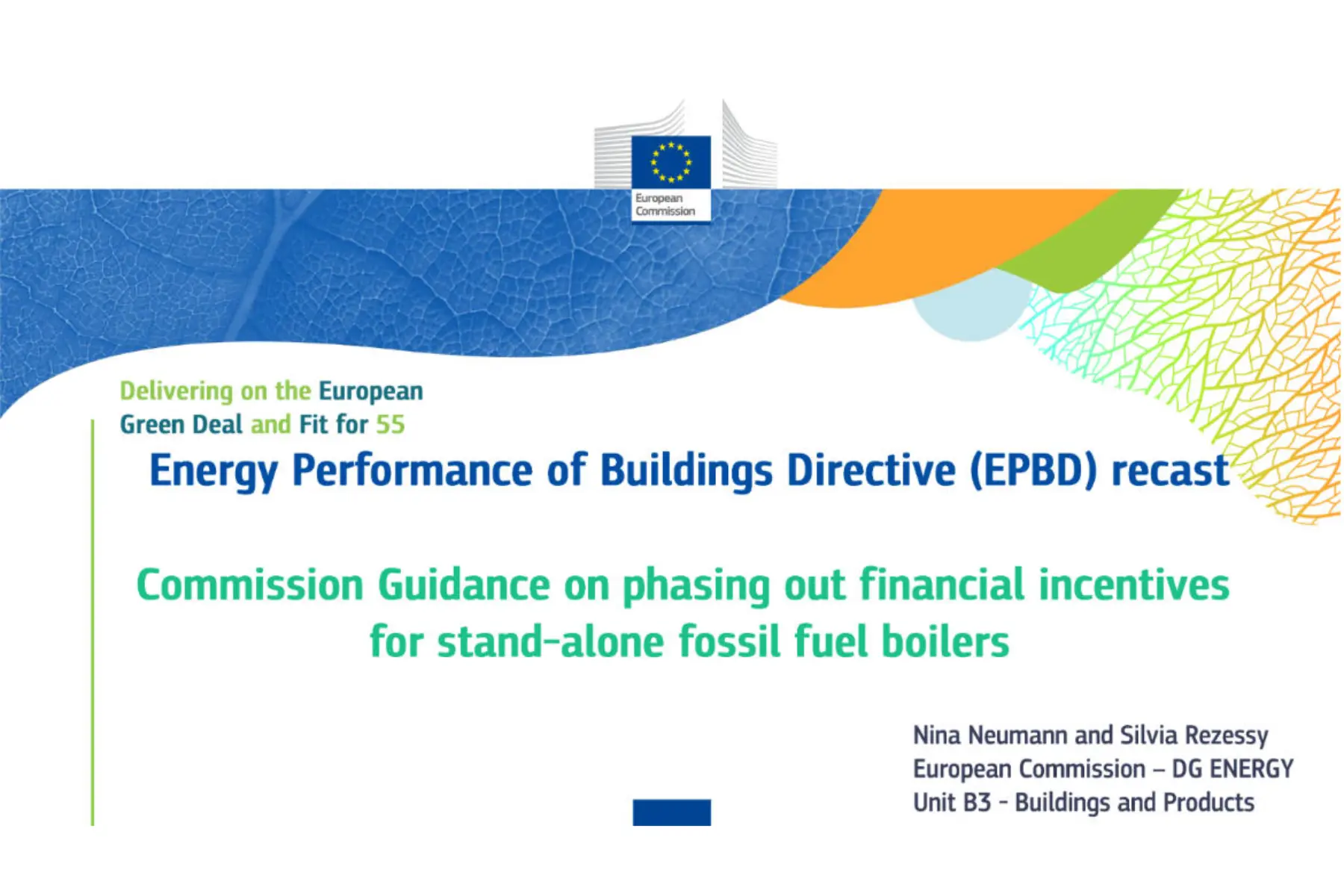
Shortly after the publication of the EPBD, the EU Commission launched a consultation to develop guidance for the implementation of this ban. On 16 May, the EU Commission discussed a first draft of the guidance with representatives of the member states.
Key points of the current draft guidance of the EU
Commission:
Differentiation between combustion engine technology and fuels. Coal, oil and natural gas are considered fossil fuels.
Financial incentives can be, for example, subsidies or tax breaks.
Situation at the time of installation is decisive. If the gas network contains predominantly natural gas at that time, no financial incentives are to be allowed.
Hybrid systems with a significant share of renewable energy (RE) are to be exempted and can continue to be promoted. Share of RE should be determined by the Member States and financial incentives should be proportional to the RE share (the more RE, the more support).
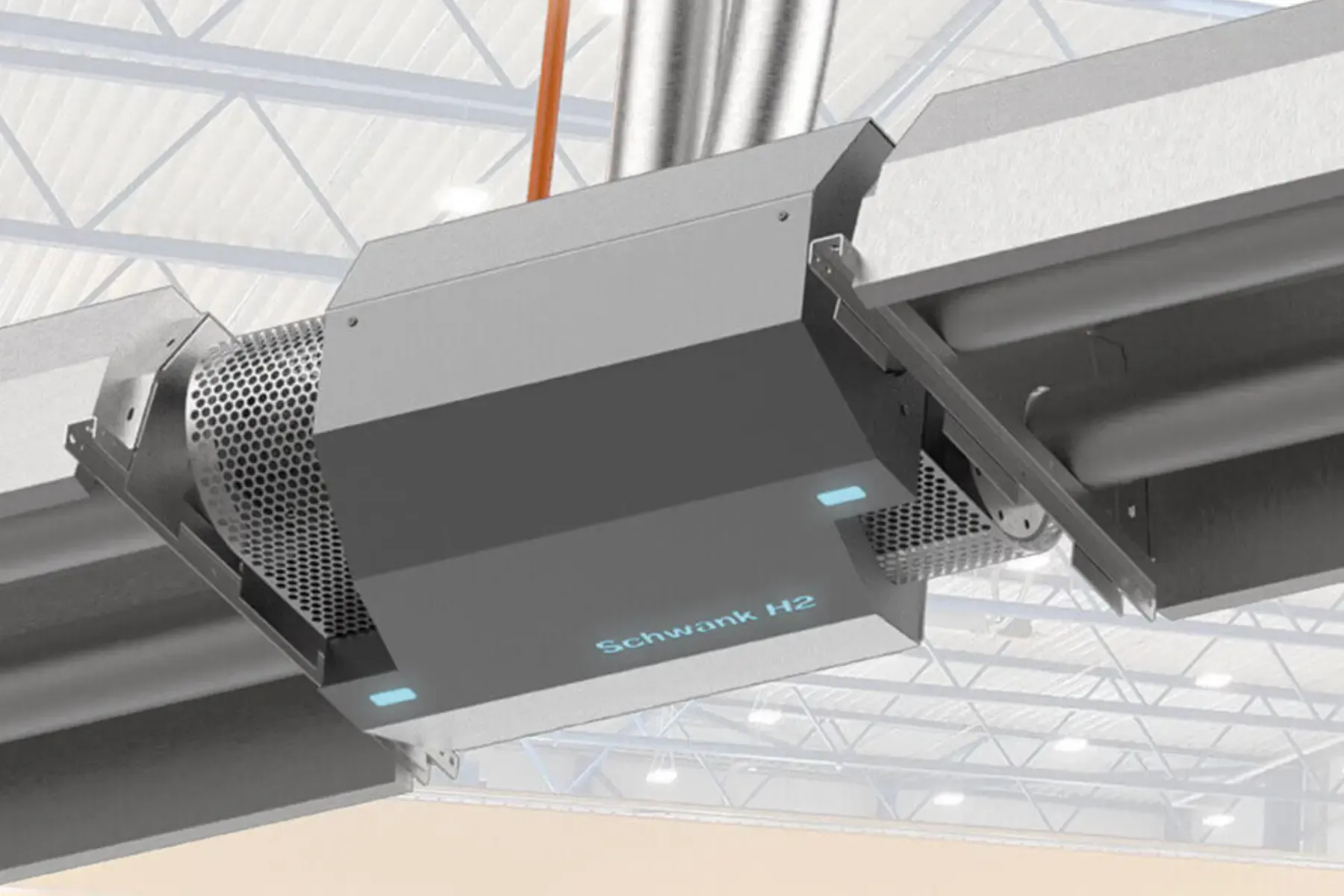
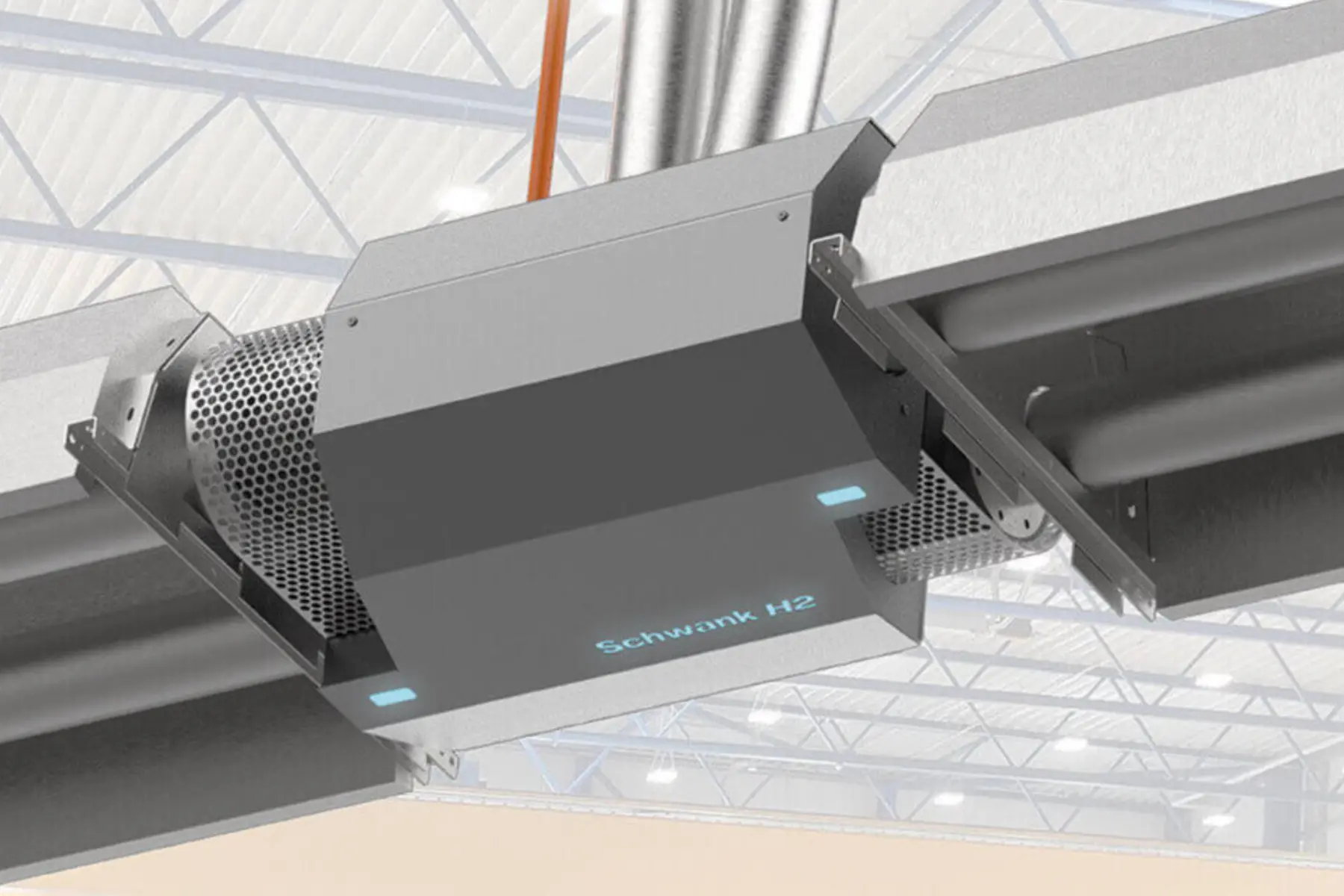
Conversion costs for the transformation to renewable gases are to be excluded, i.e. the promotion of H2-ready kits in Germany is expected to remain possible.
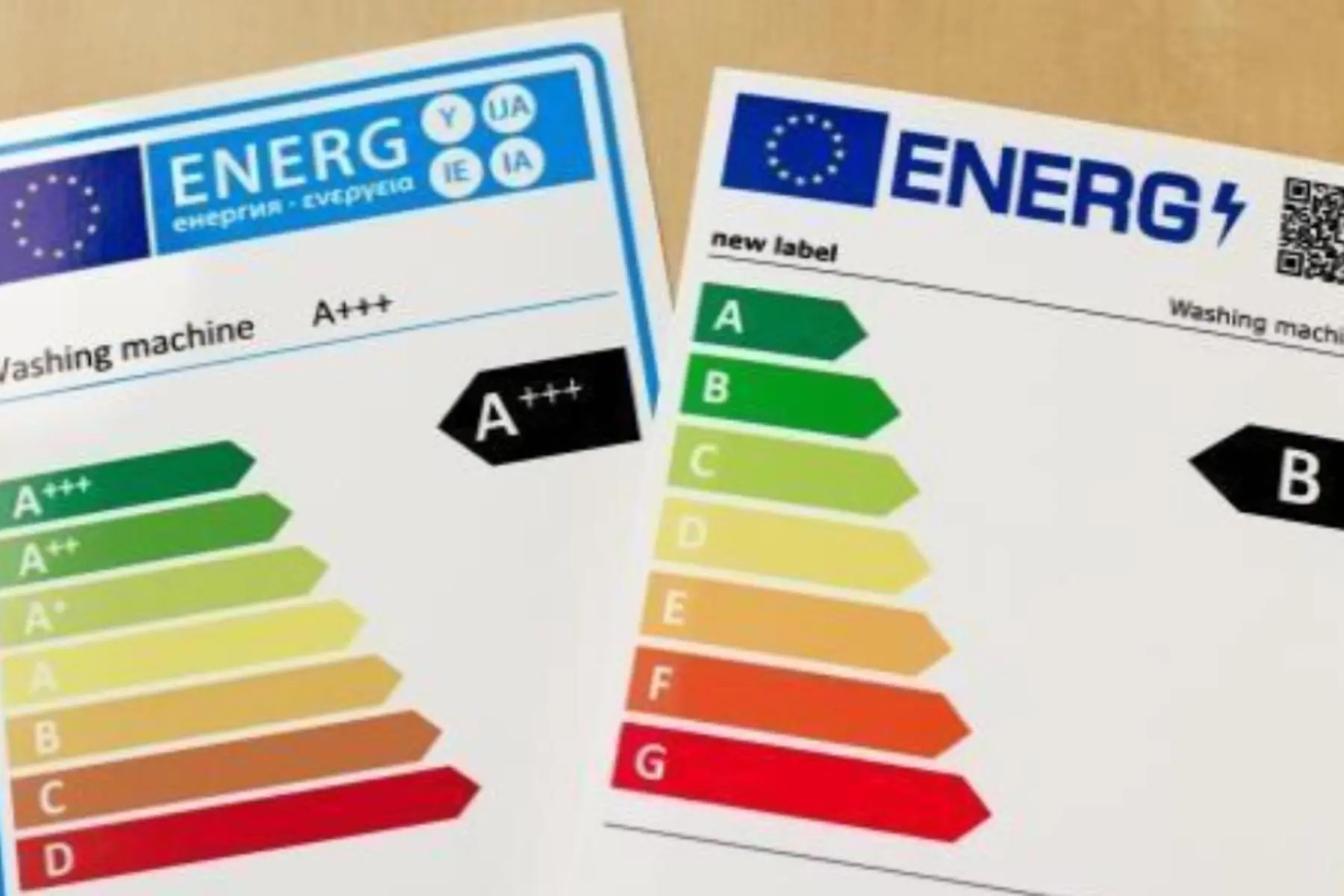
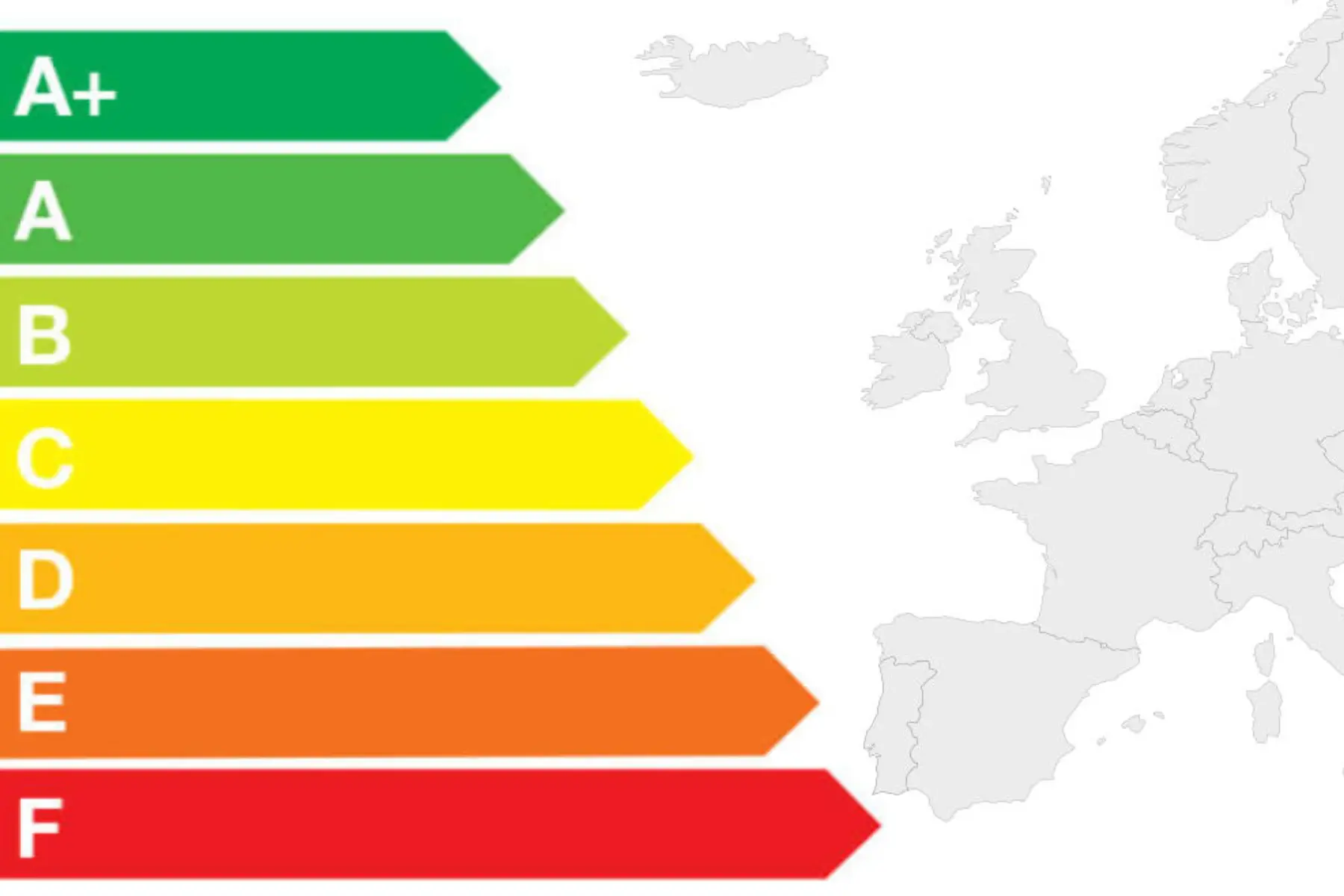
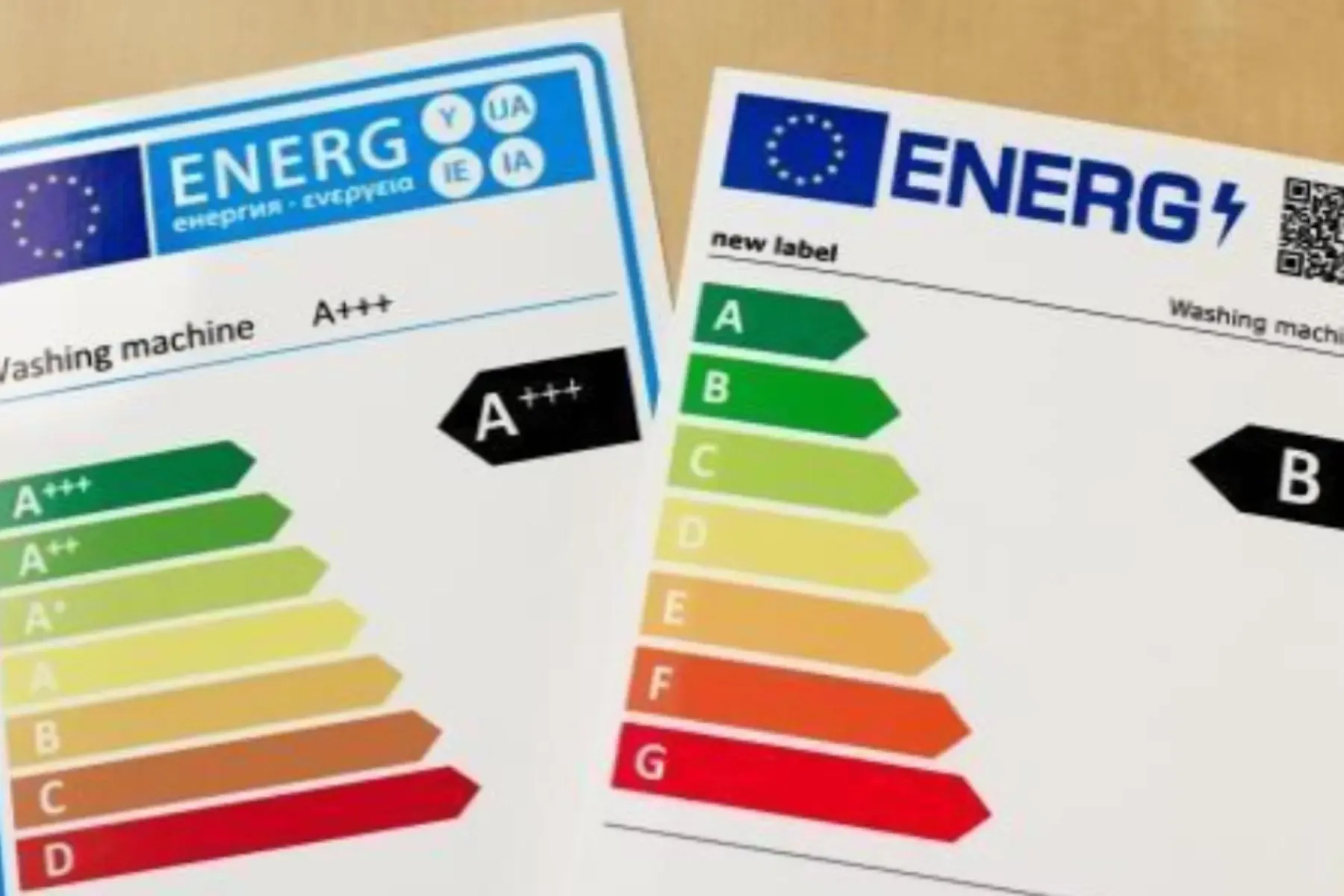
Reference by the EU Commission to the Energy Labelling Regulation (2017/1369), which in Art. 7 (2) requires Member States to limit incentives to the two highest energy efficiency classes, in which a significant number of products are available. According to the EU Commission, this could already rule out financial incentives for independent boilers regardless of the fuel. However, this interpretation of the EU Commission is controversial.
The guidance on the prohibition of financial incentives is to be adopted in the 2nd half of 2024. A separate consultation and guidance on the term „fossil fuel boiler“ (EPBD Art. 13(8)) is to follow soon.
Text in the Official Journal: EC/2024/1275
Slides of the EU Commission on the key points of the guidance
Status EPBD 2024-06
Energy Performance of Buildings Directive (EPBD)
Directive (EU) 2024/1275
On 12.03.2024, the EU Parliament adopted the Energy Performance of Buildings Directive (EPBD).
The proposed revision of the Energy Performance of Buildings Directive aims to ensure that the EU’s building sector generates significantly less greenhouse gas emissions and energy consumption by 2030 and becomes climate-neutral by 2050. In addition, more buildings with the worst values are to be renovated, and the exchange of information on energy performance is also to be improved.
Emission reduction targets:
• new buildings must be emission-free from 2030• new public buildings, or buildings used by or owned by public authorities, should be emission-free from 2028. Member States may take into account the life-cycle global warming potential of a building, which includes the global warming potential of the products used in construction, from their manufacture to their disposal.• for residential buildings, Member States must take appropriate measures to reduce average primary energy consumption by at least 16% by 2030 and by at least 20 to 22% by 2035.
• for non-residential buildings, Member States must renovate 16% of buildings with the worst energy performance by 2030 and 26% by 2033 and ensure that they meet the minimum energy performance requirements.• Where technically and economically feasible, Member States must gradually phase out solar installations by 2030 in public and non-residential buildings – depending on their size – and in all new residential buildings.
Phase-out of fossil fuels in heat supply
Member States need to take measures to decarbonize heating systems and phase out fossil fuels in heating and cooling: by 2040, there should be no more fossil fuel-powered boilers. (What exactly fossil fuels are still being defined by the EU Commission. Hybrid should not be affected.) From 2025, stand-alone boilers powered by fossil fuels may no longer be subsidized. On the other hand, financial incentives for hybrid heating systems, in which, for example, boilers are combined with solar thermal systems or heat pumps, are still permitted.
Exceptions
Exceptions to the new rules are possible for agricultural and listed buildings, and EU countries can decide to exempt buildings protected for their special architectural or historical value, as well as temporary buildings, churches and buildings used for worship
Next steps
The directive was adopted by 370 votes to 199, with 46 abstentions. Now the Council of Ministers must also formally approve it so that it can come into force. After entry into force, the Directive must be implemented nationally in the Member States within (presumably) 24 months, in the Federal Republic of Germany this is the GEG.
Background
According to the European Commission, buildings in the EU are responsible for 40% of our energy consumption and 36% of greenhouse gas emissions. On 15 December 2021, the Commission adopted a legislative proposal to revise the Energy Performance of Buildings Directive, which is part of the Fit for 55 package. The European Climate Law of July 2021 made the targets for 2030 and 2050 legally binding throughout the EU.
On 12.04.2024, the EU Council adopted the revised EPBD with 20 votes in favour, 2 against and 5 abstentions, thus clearing the last hurdle of the revision.
Once signed, it will be published in the Official Journal of the EU and will be valid for 20 days after publication. The member states now have 24 months to incorporate the revised directive into national law. A review for possible changes is planned by the EC for 2028.
EU Commission consults first draft guidance for the ban on financial incentives from 2025
European Commission, 22/05/2024 – The amended EU Building Efficiency Directive (EPBD) was published in the Official Journal of the EU on 08 May 2024 and entered into force on 28 May 2024. The end of the two-year implementation period for the member states is thus at the end of May 2026.
Article 17 (15) of the EPBD provides for a ban on financial incentives for the installation of stand-alone boilers powered by fossil fuels from 2025.
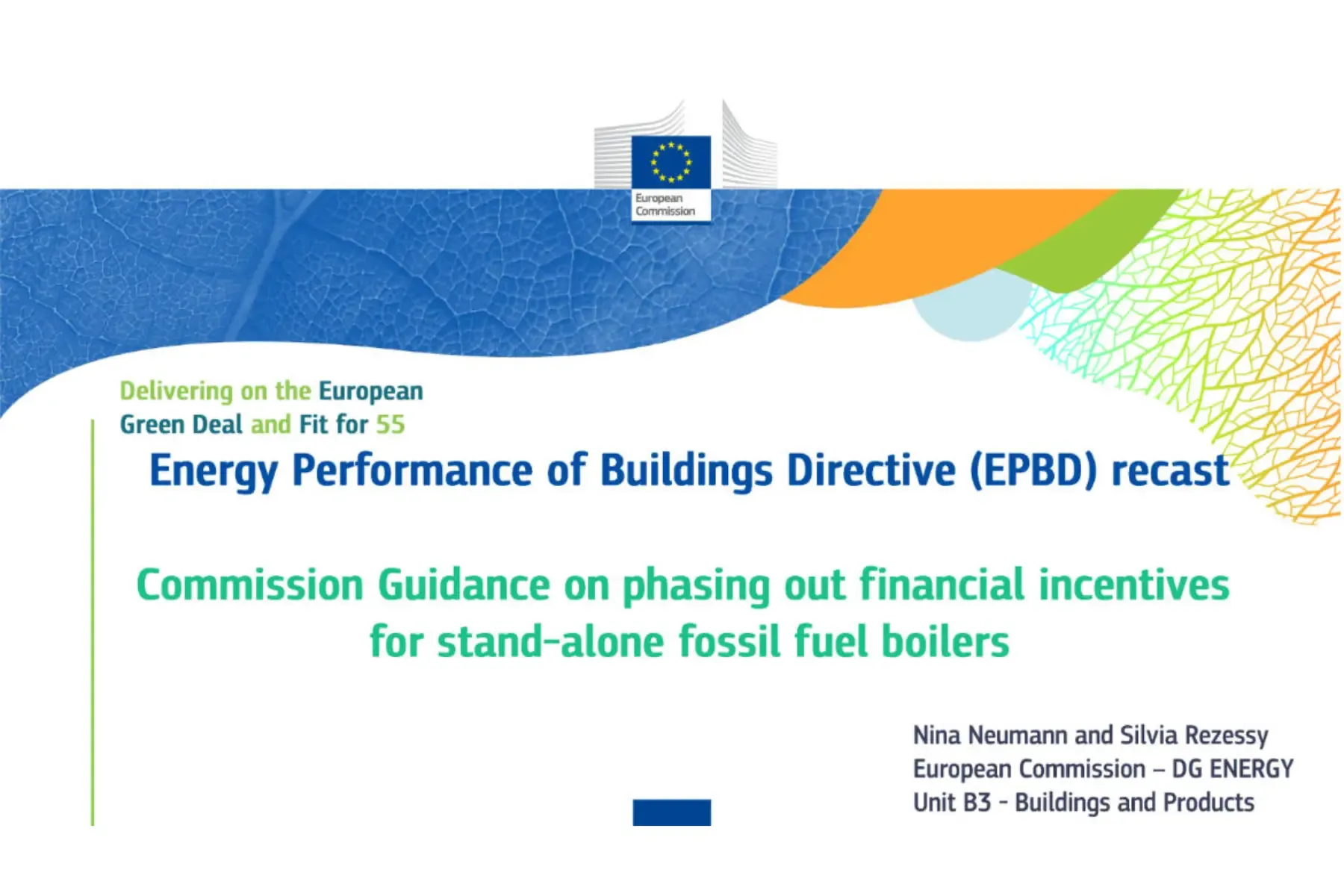
Shortly after the publication of the EPBD, the EU Commission launched a consultation to develop guidance for the implementation of this ban. On 16 May, the EU Commission discussed a first draft of the guidance with representatives of the member states.
Key points of the current draft guidance of the EU Commission:
Differentiation between combustion engine technology and fuels. Coal, oil and natural gas are considered fossil fuels.
Financial incentives can be, for example, subsidies or tax breaks.
Situation at the time of installation is decisive. If the gas network contains predominantly natural gas at that time, no financial incentives are to be allowed.
Hybrid systems with a significant share of renewable energy (RE) are to be exempted and can continue to be promoted. Share of RE should be determined by the Member States and financial incentives should be proportional to the RE share (the more RE, the more support).
Conversion costs for the transformation to renewable gases are to be excluded, i.e. the promotion of H2-ready kits in Germany is expected to remain possible.
Reference by the EU Commission to the Energy Labelling Regulation (2017/1369), which in Art. 7 (2) requires Member States to limit incentives to the two highest energy efficiency classes, in which a significant number of products are available. According to the EU Commission, this could already rule out financial incentives for independent boilers regardless of the fuel. However, this interpretation of the EU Commission is controversial.
The guidance on the prohibition of financial incentives is to be adopted in the 2nd half of 2024. A separate consultation and guidance on the term „fossil fuel boiler“ (EPBD Art. 13(8)) is to follow soon.
Text in the Official Journal: EC/2024/1275.
Slides of the EU Commission on the key points of the guidance